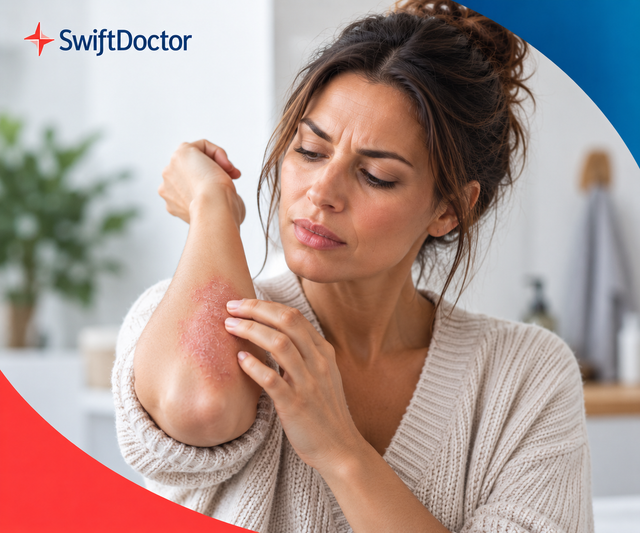
Itchy Red Spots on Skin: Common Causes, Warning Signs and When to Get Help
Common causes of itchy red spots, how they can look on different skin tones, home remedies, and the warning signs that need urgent attention.

In this guide
Medically reviewed by Dr Saira Bano, BMBS, BMedSci, MRCGP, PGCert MedEd, SCOPE-Certified Obesity Specialist
Itchy spots or patches on the skin are one of the most common reasons people search for answers online, and also one of the most confusing. The same symptom can have many different causes, from something trivial that settles on its own to something that needs prompt attention.
This guide walks through the general patterns worth knowing, how they can look different depending on skin tone, practical ways to soothe irritation at home, and the warning signs that mean it is time to get help.
What can cause itchy red spots on the skin?
Itchy spots or patches can range from temporary irritation and allergic reactions to infections and inflammatory skin conditions. Common causes include:
- Hives (urticaria), which can appear suddenly and may change shape or move around the body. [1]
- Contact dermatitis, which can develop after the skin comes into contact with an irritant or allergen. [2]
- Insect bites, which often cause localised itching, swelling or a raised spot.
- Heat rash, which can develop when sweat becomes trapped in the skin.
- Eczema and other inflammatory skin conditions, which can cause persistent itching, dryness and irritated patches.
- Mild skin infections, depending on the type and underlying cause.
The same-looking rash can have very different causes, so it is worth being cautious about relying solely on online images to diagnose yourself.
How a rash appears can depend heavily on skin tone. On white skin, irritation often looks pink or red, while on brown and black skin the same reaction may be harder to see, or may appear purple, brown, grey, or simply darker than the surrounding skin. [1][2][3] Redness alone is not a reliable indicator to rely on; texture, swelling, warmth, scaling, blistering, dryness, and whether the area is spreading all matter just as much.
Other clues can help narrow things down too: when the spots appeared, where they are on the body, whether they move or come and go, what they feel like, and whether there has been recent exposure to a new product, food, medication, insect or environmental trigger. If you suspect eczema specifically, our dedicated treatment range covers options for managing flare-ups.
Hives vs contact dermatitis: how can you tell the difference?
Hives and contact dermatitis can both cause itchy, irritated skin, but they tend to behave differently: [1][2]
| Hives (urticaria) | Contact dermatitis | |
|---|---|---|
| Onset | Can appear suddenly | Usually within hours to days of contact with a trigger |
| Behaviour | Individual patches often change shape, fade and reappear elsewhere, sometimes within hours | Generally stays where the skin touched the trigger, though it can spread beyond that area |
| Appearance | Raised, itchy patches or welts | Dryness, scaling, cracking, soreness, or small blisters, depending on severity |
| Common triggers | Foods, medicines, infections or temperature changes; often no trigger is identified | Soaps, cosmetics, detergents, fragrances, metals and certain plants |
Appearance alone cannot reliably distinguish the two, particularly across different skin tones, which is part of why a clinical assessment is often more useful than guesswork.
Could it be an infection or an insect bite?
Insect bites and minor skin infections can both cause itchy, swollen or irritated areas, but a few features may offer clues: a localised itchy or raised spot, swelling around the area, sometimes a visible central bite mark, or several bites appearing together in a pattern. Reactions vary considerably between people, and a bite can become quite swollen without necessarily being infected, so significant swelling alone is not automatically a sign of infection, though it is worth watching how the area changes over the following days.
How can you soothe itchy skin at home?
The best approach depends on the underlying cause, but a few general measures can help reduce irritation in the meantime. Avoid scratching where possible, as it can damage the skin, increase irritation and potentially introduce infection. A cool, damp compress applied for short periods can help soothe discomfort.
Using a fragrance-free moisturiser or emollient regularly, such as Cetraben or Aveeno, can help if the skin is dry or irritated. It is also worth avoiding perfumed soaps, shower gels, harsh detergents and fragranced skincare products while the skin recovers, and keeping showers or baths lukewarm, since heat can make itching worse for some people.
For more inflamed patches, a topical steroid cream such as Eumovate may help, but it is intended for short-term use, is not suitable for infected skin, and should generally be avoided on the face or in skin folds without medical advice. [4] Check with a pharmacist or clinician first if you are unsure whether a topical steroid is appropriate for your symptoms.
What are the warning signs that need urgent medical attention?
Most itchy rashes are not emergencies, but a small number of symptoms need urgent assessment. Seek emergency help immediately if you or someone else has difficulty breathing, wheezing, or a feeling that the throat is closing, particularly alongside a sudden rash or hives. [1]
Swelling of the lips, tongue, mouth or throat can be a sign of a serious allergic reaction and also needs urgent attention, as can a rash accompanied by a fever and feeling very unwell. On brown and black skin, signs such as the skin, lips or tongue turning pale, grey or blue can be easier to spot on the palms of the hands or soles of the feet. [1] This article is not a substitute for a clinical assessment, so if in doubt, seek help rather than wait.
When should you see a doctor about itchy red spots?
It is sensible to seek medical advice if itchy spots are persistent, recurrent, spreading, or getting worse rather than gradually improving. It is also worth speaking to a GP if the cause is unclear, or if the rash keeps returning without an obvious trigger.
Persistent itching, pain, swelling, oozing, crusting, or other changes to the skin are all reasonable grounds to seek an assessment rather than continuing to manage things alone. A private online GP appointment can help you get clarity quickly rather than waiting to see how things develop.
How SwiftDoctor can help
Itchy skin and unexplained rashes can have many different causes, so getting the right advice matters before choosing a treatment. SwiftDoctor’s private GPs can assess your skin symptoms, discuss your individual history, and recommend an appropriate next step, and where clinically appropriate, may suggest treatment or suitable skincare products to help manage the underlying cause rather than leaving you to guess.
Frequently asked questions
What causes itchy red spots on the skin?
Common causes include hives, contact dermatitis, insect bites, heat rash, eczema and mild skin infections. Because many causes can look similar, the exact trigger is not always obvious from appearance alone.
How can you tell if a rash is serious?
Most rashes are not serious, but seek urgent help if there is difficulty breathing, swelling of the lips, tongue or throat, or a rash alongside a high fever and feeling very unwell. [1] Persistent, spreading or recurring rashes are worth having assessed even if they are not an emergency.
Do itchy red spots look different on different skin tones?
Yes. On white skin, irritation often appears pink or red, while on brown and black skin the same reaction may be less visible, or may appear purple, brown, grey, or darker than the surrounding skin. [1][2] This is why texture and swelling matter just as much as colour.
What helps soothe itchy skin at home?
Avoiding scratching, applying a cool compress, using fragrance-free moisturisers regularly, avoiding harsh or perfumed products, and keeping showers lukewarm can all help, though what works best depends on the underlying cause.
Can allergies cause itchy red spots on the skin?
Yes, whether through hives, contact dermatitis, or a reaction to a food, medicine or insect bite. Identifying the trigger, where possible, is often the most useful step in preventing it happening again.
Can a new skincare product cause itchy red spot?
Yes, new skincare or cosmetic products are a common cause of contact dermatitis, particularly those containing fragrance or preservatives. [2] If symptoms started shortly after using a new product, stopping it is a reasonable first step.
Why are my itchy spots spreading?
Spreading can happen for several reasons, including an ongoing allergic reaction, an irritant that has not been fully avoided, or the condition simply progressing. It is a reasonable reason to have things assessed rather than waiting to see what happens.
Sources
- NHS, "Hives", nhs.uk
- NHS, "Contact dermatitis", nhs.uk
- NHS Digital Service Manual, "Skin symptoms", service-manual.nhs.uk
- Electronic Medicines Compendium (eMC), "Eumovate Cream: SmPC" (GSK), medicines.org.uk
This guide is for general information and isn't a substitute for personal medical advice. If you're unsure whether a treatment is right for you, speak to a clinician.
Want to talk it through?
Book a private GP appointment at a time that suits you.
Book a GP appointmentKeep reading