High Fibre Foods: Guide to Satiety and Weight Management
Only 9% of UK adults currently manage to meet the government’s recommended daily target of 30g of fibre, according to the British Dietetic Association. For many, this nutritional gap leads to persistent hunger while diet…

In this guide
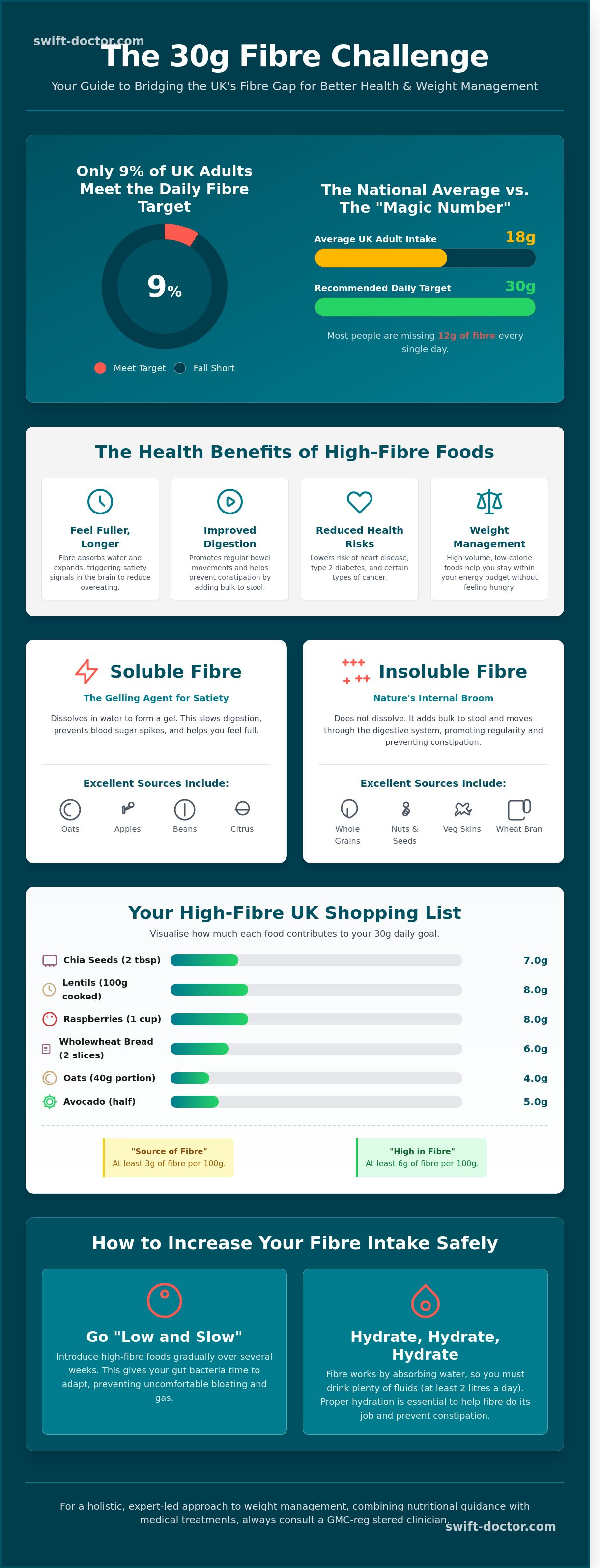
Only 9% of UK adults currently manage to meet the government’s recommended daily target of 30g of fibre, according to the British Dietetic Association. For many, this nutritional gap leads to persistent hunger while dieting and the physical discomfort of digestive sluggishness. You likely feel that managing your weight shouldn't involve a constant battle with your own appetite or total confusion over complicated nutritional labels. It's difficult to stay motivated when your body feels constantly unsatisfied and your energy levels fluctuate.
This guide identifies the most effective high fibre foods to transform your digestive health and help you stay fuller for longer. We provide a clear, professional path to hitting your daily targets using staples found in any local British supermarket. We'll explore a curated list of nutrient-dense ingredients, the medical link between fibre and satiety, and three practical ways to reach that 30g goal for 2026 without stress or guesswork. Our focus is on providing you with the reliable information needed to make informed, healthy choices for your long term wellbeing.
Key Takeaways
- Understand why the UK guideline of 30g of daily fibre is vital for gut health and how to bridge the gap from the national average of just 18g.
- Discover how incorporating more high fibre foods into your diet triggers satiety hormones, helping you feel fuller for longer on fewer calories.
- Access a comprehensive UK shopping list with gram-per-serving data to help you hit your nutritional goals during your weekly shop.
- Learn the 'low and slow' rule for increasing intake safely, alongside the essential hydration strategies needed to prevent bloating and support digestion.
- Explore how SwiftDoctor’s GMC-registered clinicians combine nutritional guidance with medical treatments for a holistic, expert-led approach to weight management.
Table of Contents
- What Are High Fibre Foods and Why Is 30g the Magic Number?
- The Satiety Secret: How Fibre Supports Weight Management
- Top High Fibre Foods: A Comprehensive UK Shopping List
- Practical Tips: How to Increase Your Fibre Intake Safely
- Clinical Weight Loss and Nutrition: The SwiftDoctor Approach
What Are High Fibre Foods and Why Is 30g the Magic Number?
Dietary fibre is the part of plant-based foods that your body cannot digest or absorb. Unlike fats, proteins, or carbohydrates that the body breaks down and uses for energy, fibre passes relatively intact through your digestive system. What is dietary fibre? It is a complex carbohydrate that remains essential for maintaining gut health and preventing chronic conditions. Incorporating high fibre foods into your daily routine is one of the most effective ways to support your long term physical wellbeing.
In the UK, the government Scientific Advisory Committee on Nutrition recommends that adults consume 30g of fibre every day. This target was established in 2015 to help reduce the risk of heart disease, type 2 diabetes, and colorectal cancer. Despite these clear guidelines, the National Diet and Nutrition Survey indicates that the average UK adult only manages to eat about 18g per day. This 12g deficit means most people are missing out on significant protective health benefits. To make informed choices at the supermarket, you should check the nutritional information panel. UK labelling laws state that a product can only be called a "source of fibre" if it contains 3g of fibre per 100g. For a product to be legally defined as "high in fibre", it must contain at least 6g of fibre per 100g.
Soluble Fibre: The Gelling Agent for Satiety
Soluble fibre dissolves in the water found in your digestive tract to form a thick, gel-like substance. This gel slows down the rate at which food leaves the stomach, which increases the feeling of fullness and helps with weight management. From a clinical perspective, this type of fibre is vital because it slows the absorption of glucose, preventing sharp spikes in blood sugar. It also binds to cholesterol in the digestive system and carries it out of the body. Excellent sources include oats, barley, beans, and the soft flesh of fruits like citrus and apples.
Insoluble Fibre: Nature's Internal Broom
Insoluble fibre does not dissolve in water. It retains its structural integrity as it moves through the gut, acting as a physical broom that adds bulk to the stool. This process is essential for maintaining regular bowel movements and reducing "transit time", which is the speed at which waste moves through the intestines. By keeping the digestive system moving, high fibre foods rich in the insoluble variety help prevent constipation and support overall colon health. You can find high levels of insoluble fibre in wholemeal flour, wheat bran, nuts, seeds, and the skins of vegetables.
The Satiety Secret: How Fibre Supports Weight Management
Weight loss often feels like a battle against your own biology, but high fibre foods provide a distinct physiological advantage. They operate on the principle of volumetrics, which allows you to consume a larger physical volume of food for significantly fewer calories. Soluble fibre absorbs water and expands in your digestive tract, creating a gel-like substance that physically occupies space. This bulk triggers stretch receptors in your stomach wall, sending immediate signals to your brain that you've consumed enough. It's a mechanical solution to a metabolic problem.
The hormonal response to fibre is equally powerful. As fibre moves through your system, it stimulates the release of satiety hormones like peptide YY and cholecystokinin. These chemicals act as natural appetite suppressants. This process addresses the primary reason most weight-loss plans fail: the persistent feeling of "starving." When you incorporate more high fibre foods, you aren't just eating less; you're fundamentally changing how your body perceives hunger. If you're looking for ways to start, these NHS tips for increasing fibre provide a practical foundation for your daily meals.
Evidence also supports the "second meal effect." This phenomenon occurs when the fibre you eat at breakfast, such as oats or rye, continues to regulate your appetite and blood sugar during lunch. It creates a metabolic carry-over that makes it easier to resist high-calorie temptations later in the day. It's not just about the meal you're eating now, but how that meal protects your choices four hours later.
Fibre and GLP-1 Medications (Mounjaro & Wegovy)
Clinical weight-loss injections like Wegovy and Mounjaro have transformed obesity treatment in the UK, but they require specific dietary support. These medications slow gastric emptying, which can frequently lead to uncomfortable side effects like constipation. Fibre acts as the necessary mechanical aid to keep the digestive system moving at a healthy pace. There's a perfect synergy here: the medication suppresses the brain's hunger signals, while the physical bulk of fibre manages the gut's transit time. Fibre is the essential companion to a clinical weight-loss prescription, ensuring digestive comfort while the medication regulates metabolic function. If you're navigating these treatments, our private medical team can offer professional guidance on managing your nutritional needs.
Blood Sugar Stability and Cravings
Fibre acts as a physical barrier that slows the absorption of sugar into your bloodstream. This prevents the rapid insulin spikes that are usually followed by a "crash," which is the exact moment your brain demands a sugary snack for a quick energy boost. By 2026, metabolic health standards will likely place even greater emphasis on dietary "ballast" as a prerequisite for insulin sensitivity. When your blood sugar remains stable, the impulsive behaviour of reaching for biscuits or crisps diminishes. You're no longer at the mercy of your glucose levels; you're in control of your appetite.
Top High Fibre Foods: A Comprehensive UK Shopping List
Choosing the right high fibre foods during your weekly supermarket trip is a practical way to manage your long-term health. Most adults in the UK currently consume only 20g of fibre daily, falling short of the 30g recommendation set by health authorities. To bridge this gap, you should focus on unprocessed, plant-based options that offer the highest nutritional yield per serving. For a detailed breakdown of daily requirements and the clinical benefits of roughage, you can consult the British Dietetic Association's guide to dietary fibre. Incorporating these items into your routine doesn't just improve digestion; it supports stable blood sugar levels and long-term weight management.
Grains, Seeds, and Pulses: The Heavy Hitters
Pulses are the most effective way to increase volume and satiety. A 100g portion of boiled green lentils contains 8.1g of fibre, while the same amount of chickpeas provides 7.6g. These are excellent for heart health and are easy to add to stews or salads. Small additions also make a measurable impact. Adding two tablespoons of chia seeds to your morning porridge contributes 10g of fibre immediately. Swapping white bread for wholemeal is equally vital. Standard white loaves contain roughly 2.5g of fibre per 100g, whereas wholemeal varieties offer 7g or more. Wholemeal pasta is another essential staple, providing 9g per 100g compared to just 3g in refined white pasta.
Vegetables and Fruits: The Micronutrient Heroes
Fruits and vegetables provide essential micronutrients alongside necessary roughage. Raspberries and blackberries are the leaders in this category, offering 6.5g of fibre per 100g. They're far more effective than grapes or melons for those tracking intake. Cruciferous vegetables like Brussels sprouts (4.1g per 100g) and broccoli (2.8g per 100g) act as excellent volume-fillers for evening meals. Always remember the 'skin-on' rule. Peeling a medium potato or an apple removes approximately 30% to 50% of its total fibre content. Keeping the skin on ensures you don't discard the most beneficial part of the plant. This simple habit significantly increases your daily intake without any extra cost.
To diversify your diet, look for these often overlooked high fibre foods that provide a concentrated boost:
- Air-popped popcorn: A surprising 14g of fibre per 100g, making it a superior snack choice to crisps.
- Avocado: Contains 6.7g of fibre per 100g, alongside healthy monounsaturated fats.
- Pears: One medium pear with the skin on provides about 5.5g of fibre.
- Dried figs: A dense source of fibre with roughly 2.9g per individual fruit.
Focusing on these whole, unprocessed options ensures you meet your targets while avoiding the hidden sugars often found in "high fibre" processed snacks. By making these specific swaps, you'll find that reaching the 30g daily goal becomes a seamless part of your lifestyle rather than a chore.
Practical Tips: How to Increase Your Fibre Intake Safely
Transitioning to a diet rich in high fibre foods requires a strategic approach to ensure your digestive system adapts without discomfort. The most effective method is the 'low and slow' rule. You should increase your daily intake by approximately 5g every three days until you reach the UK recommended target of 30g. Rapidly doubling your intake overnight often leads to significant abdominal cramping as your gut microbiome shifts to process the increased plant matter.
Hydration is the second pillar of a successful transition. Fibre acts like a sponge in your digestive tract; it requires water to move efficiently through the intestines. If you increase fibre without increasing fluids, you risk constipation. Aim for 1.5 to 2 litres of water daily to keep the process smooth. When shopping in UK supermarkets, check the 'Nutrition Facts' panel. For a product to be legally labelled as 'high fibre' in the UK, it must contain at least 6g of fibre per 100g.
Simple daily hacks can boost your numbers without major recipe changes. Try these small adjustments:
- Keep the skins on potatoes and carrots for an extra 2g to 3g of fibre per serving.
- Stir a tablespoon of flaxseeds or linseeds into your morning yoghurt.
- Replace half the meat in your Bolognese or chilli with red lentils or chopped mushrooms.
A Typical 30g Fibre Day: Sample Meal Plan
Reaching the 30g goal is manageable with the right combination of high fibre foods. Start your morning with porridge topped with 80g of raspberries and a tablespoon of chia seeds, providing roughly 10g of fibre. For lunch, a quinoa salad mixed with 100g of black beans and half an avocado delivers 12g. Finish with a dinner of 75g (dry weight) wholewheat pasta tossed with roasted Mediterranean vegetables for another 8g, hitting your daily target exactly.
Overcoming Common Digestive Side Effects
It's normal to experience increased flatulence or mild bloating when you first change your diet. This happens because your gut bacteria produce gas while fermenting the new fibres. To manage this, try sipping peppermint tea after meals or taking a 15 minute brisk walk to stimulate peristalsis. If you experience persistent abdominal pain, a change in bowel habits lasting longer than 14 days, or blood in your stool, you should consult a professional. If you're concerned about sudden digestive changes, you can book a private GP consultation for a thorough assessment in the comfort of your home.
Clinical Weight Loss and Nutrition: The SwiftDoctor Approach
At SwiftDoctor, we don't view weight management as a simple transaction or a one-off prescription. We're a clinical partner dedicated to your long-term health and wellbeing. Our GMC-registered doctors understand that modern medications like Mounjaro or Wegovy are most effective when they're paired with a robust nutritional foundation. This is why we place such a heavy emphasis on your daily diet during our consultations.
Including high fibre foods in your meals isn't just a suggestion; it's a physiological necessity for success. Fiber helps stabilise blood sugar levels and enhances the natural satiety effects of GLP-1 medications. Our medical team ensures you have the knowledge to choose the right nutrients, preventing the common digestive side effects that sometimes accompany rapid weight loss. Adopting a medical-first mindset means we look at your biology, your habits, and your goals as a single, connected system.
Safe Weight Loss Under Medical Supervision
Patient safety is the cornerstone of our service. We only dispense genuine UK medication through GPhC-registered pharmacies, ensuring you receive exactly what your doctor prescribed. Our online consultation process is thorough. We screen for medical suitability and dietary habits to ensure your chosen treatment is safe for your specific circumstances. We don't believe in guesswork.
To help you prepare for your consultation, we provide professional tools to track your progress. You can use our BMI calculator to determine your current baseline. Additionally, our Calorie calculator helps you plan a sustainable daily intake that incorporates plenty of high fibre foods. These resources empower you to make informed decisions before you even speak with a clinician.
Start Your Journey Today
You don't have to navigate the complexities of weight loss alone. Our platform makes it simple to check your eligibility for clinical weight-loss treatments from the comfort of your home. We're committed to patient safety and provide discreet, nationwide delivery across the UK. Your medication arrives in temperature-controlled packaging, maintaining its integrity from our pharmacy to your door.
A healthier, more satiated lifestyle is within your reach. By combining medical expertise with a diet rich in essential nutrients, you can achieve results that last. Start your consultation today and take a decisive step toward a more confident future. Our team is here to support you with expert care, clinical precision, and a service designed around your life.
Take the Next Step Towards Sustainable Health
Achieving the NHS-recommended 30g daily fibre target is a vital step for weight management in 2026. Integrating high fibre foods into your diet helps regulate blood sugar levels and increases satiety. This makes it easier to maintain a healthy weight without the burden of constant hunger. While these dietary foundations are essential, many people find that clinical support provides the necessary edge for long-term success. At SwiftDoctor, we combine nutritional awareness with professional medical intervention to help you reach your goals safely. Our team of GMC-registered doctors and our GPhC-registered pharmacy ensure you receive the highest standard of care from the comfort of your home. We offer a seamless process that removes the stress of traditional appointments. With next-day discreet UK delivery, your treatment arrives quickly and privately. You've already taken the first step by educating yourself on nutrition; now it's time to build a comprehensive plan that works for your lifestyle. Let's make your health a priority together.
Start your medical weight-loss consultation with SwiftDoctor today and take control of your future.
Frequently Asked Questions
What is the highest fibre food I can buy in the UK?
Wheat bran is the highest fibre food commonly available in UK supermarkets, providing approximately 42g of fibre per 100g. For a more palatable breakfast option, bran flakes offer around 15g to 20g per 100g. Including these in your morning routine helps you reach the NHS recommended daily target of 30g for adults. It's a simple way to incorporate high fibre foods into your diet without complex meal preparation.
Can you eat too much fibre when trying to lose weight?
You can consume too much fibre, as exceeding 70g per day often leads to abdominal bloating, gas, or intestinal blockages. While fibre aids weight loss by increasing satiety, sudden increases can overwhelm your digestive system. It's vital to increase your intake gradually and drink at least 1.2 litres of water daily to help the fibre move through your gut effectively.
Do I need a fibre supplement if I eat high fibre foods?
Most people don't need a supplement if they consistently consume high fibre foods like lentils, chickpeas, and wholegrains to meet the 30g daily goal. Supplements like psyllium husk are useful tools if dietary changes aren't possible, but whole foods provide additional vitamins and minerals that capsules lack. If you're struggling with chronic constipation, a clinical consultation can determine if a supplement is appropriate for your specific needs.
Is popcorn actually a high fibre snack?
Air-popped popcorn is a genuine high fibre snack because it's a 100% unprocessed whole grain. A standard 30g serving provides approximately 3.5g of fibre, which is more than the 2g found in a similar portion of brown rice. Avoid pre-packaged cinema versions that often contain over 20g of sugar or high levels of saturated fats, as these negate the nutritional benefits.
How long does it take for a high fibre diet to improve digestion?
You'll typically notice improvements in bowel regularity within 24 to 72 hours of increasing your fibre intake. However, it takes the gut microbiome about 4 weeks to fully adapt to a new dietary pattern without causing excess gas. Consistency is key. If symptoms like persistent bloating last longer than 14 days, it's advisable to seek professional medical advice to rule out underlying sensitivities.
Will a high fibre diet help me lose belly fat specifically?
A high fibre diet helps reduce visceral belly fat, with research showing a 3.7% reduction in abdominal fat for every 10g increase in soluble fibre over a five year period. Fibre reduces insulin spikes and keeps you feeling full for longer, which prevents overeating. While you can't spot-reduce fat, the metabolic benefits of fibre specifically target the dangerous fat stored around your internal organs.
Are tinned beans as good for fibre as dried beans?
Tinned beans are just as effective as dried beans for increasing your fibre intake, as the canning process doesn't significantly alter the fibre content. A 400g tin of chickpeas typically contains 18g of fibre, matching the levels found in home-cooked dried varieties. Always rinse tinned pulses under cold water to remove up to 40% of the added sodium often used in the canning liquid.
Can I get enough fibre on a gluten-free diet?
You can easily meet your fibre requirements on a gluten-free diet by prioritising pseudocereals and legumes. Quinoa provides 7g of fibre per cooked cup, while buckwheat offers 10g per 100g. Many gluten-free processed products are low in nutrients, so focus on naturally gluten-free high fibre foods such as sweet potatoes, nuts, and seeds to ensure your digestive health remains optimal.
This guide is for general information and isn't a substitute for personal medical advice. If you're unsure whether a treatment is right for you, speak to a clinician.
Want to talk it through?
Book a private GP appointment at a time that suits you.
Book a GP appointmentKeep reading